
eBird by Cornell Lab
Screenshots
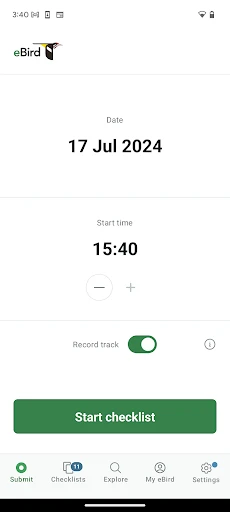


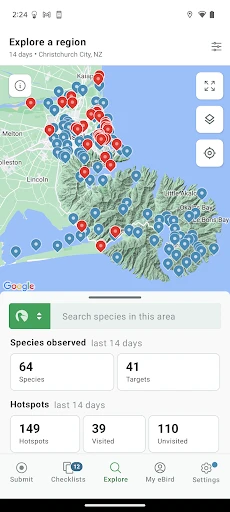
Description
About eBird by Cornell Lab Feature - A Global Platform for Birdwatchers
eBird, developed by the Cornell Lab of Ornithology, is a comprehensive citizen-science platform designed for birdwatchers worldwide. It serves as a digital logbook, a vast database, and a real-time resource for tracking bird observations. The app empowers users to record their sightings, contribute to global scientific research, and explore bird data across the globe. By transforming individual observations into a shared scientific resource, eBird bridges the gap between recreational birding and conservation science, fostering a global community dedicated to understanding and protecting bird populations.
Chapter 1: Function
eBird's core functionality centers on efficient and standardized bird data collection. Users can log their birding sessions by creating checklists, adding species observed, and noting counts. The app utilizes GPS to automatically record location and track distance traveled. It offers offline capabilities for use in remote areas, syncing data once connectivity is restored. A critical feature is its integration with a global database, providing dynamic lists of likely species for the user's location and time of year, which aids in accurate identification. Users can also explore personalized statistics, view their life lists, and upload media such as photos and sounds to document rare sightings. Essentially, it digitizes the traditional birding notebook with scientific rigor.
Chapter 2: Value
The primary value of eBird lies in its dual role as an indispensable tool for birders and a powerful engine for ornithological science. For the individual user, it offers immense practical value: organized record-keeping, access to millions of sightings to plan outings via its 'Explore' maps and bar charts, and tools to improve identification skills. Its scientific and societal value, however, is profound. Every submitted checklist becomes a data point in the world's largest biodiversity-related citizen science project. These aggregated, real-time data are used by researchers, conservationists, and policymakers to monitor species distributions, population trends, migration patterns, and the impacts of climate change. This information guides critical conservation actions and habitat protection strategies. The app's advantages include its global standardization, ensuring data quality through regional reviewers, and its free, non-commercial nature, being backed by the reputable Cornell Lab. It transforms casual observation into meaningful contribution, giving birdwatchers a direct role in global conservation efforts.
Chapter 3: Scenarios
eBird caters to a wide spectrum of users, from novice backyard birders to dedicated ornithologists. The primary user groups include recreational birdwatchers seeking to document their personal lists and discover new birding hotspots. It is equally vital for professional biologists and conservationists who rely on its large-scale data for research and environmental impact assessments. Educators also use eBird as a tool to engage students in hands-on science. Typical use cases involve a birder on a weekend trail walk logging all species seen and heard, submitting the checklist to contribute to local knowledge. A traveler might use the 'Explore' feature to find target species in a new region. During events like the annual Great Backyard Bird Count, thousands of users simultaneously submit data, creating a massive snapshot of bird populations. For any individual curious about the birds around them, eBird provides a structured way to learn, participate, and connect with a global community.
Uninstall Instructions
For step-by-step guidance on how to safely remove this application from your device, please refer to our 《Uninstall Instructions》 document.
Pros
- integrates global citizen science with professional ornithology databases
- offline checklist submission for remote birding locations
- real-time hotspot maps using crowd-sourced sighting data
- automated personal life list and regional statistics tracking
- supports photo and audio uploads for expert community verification
Cons
- requires manual data entry which can be time-consuming
- steep learning curve for non-birders due to scientific rigor
- limited social features compared to casual birding apps
- high data accuracy dependency on user expertise
- offline maps require pre-downloading and storage space
Frequently Asked Questions
What is eBird and what is its primary function?
eBird is a citizen science platform and mobile app developed by the Cornell Lab of Ornithology. Its core function is to allow birdwatchers to log, share, and archive their bird observations globally. By submitting checklists, users contribute to a massive scientific database used for research, conservation, and tracking bird populations. The app helps you maintain your personal life list and explore hotspots.
Is eBird free to use, and are there in-app purchases?
Yes, the eBird mobile app and its core birding functionality are completely free to download and use. There are no in-app purchases or subscriptions required for submitting checklists, exploring data, or accessing most features. The Cornell Lab is a non-profit, and the service is supported by voluntary donations and grants, not user fees.
What devices and systems is the eBird app compatible with?
The eBird app is available for both iOS and Android mobile devices (smartphones and tablets). It requires an internet connection for data submission and syncing, though you can collect observations offline in the field. The service also has a full-featured website for desktop computers. It is designed for global use, with regional bird guides and data.
How does eBird's data submission and quality control work?
Users submit data via standardized checklists, noting location, date, effort, and species. eBird employs a robust automated data review system and a network of regional experts who vet unusual or rare sightings. This ensures the data remains scientifically valuable. You may receive an email requesting details for uncommon reports before they are fully accepted into the public database.
Can I delete or correct an observation after submitting it?
Yes, you can edit or delete your own observations at any time through the 'My eBird' section on the website or mobile app. This allows for corrections to species identification, counts, or location details. All changes are logged within the system. For complex data issues, you can contact the eBird support team directly through the help section on their website.
App Info
Technical Info
Recommended For You

WhatsApp Messenger
Communication

Messenger - Texting App
Communication

Nomad Sculpt
Art & Design

Anime AI - Photo Maker
Art & Design

Funny Jokes And Riddles
Comics

Xcel Energy
Business

HiHello: Digital Business Card
Business

AGE-R medicube Digital clinic
Beauty

Beauty Calculator Pretty Scale
Beauty

Chat Cloner Secretly View Chat
Communication

Sunoco: Pay fast & save
Auto & Vehicles

Tarteel ترتيل - Memorize Quran
Books & Reference

Talking Baby Babsy At The Zoo
Comics

Email - Fast and Smart Mail
Communication

RSA Authenticator (SecurID)
Communication

Anime tv - Watch Anime Online
Comics

Phone Dialer - Call Recorder
Communication

BookFunnel
Books & Reference

Video AI - AI Hug & Kiss Maker
Art & Design

FillUp - Gas Mileage Log
Auto & Vehicles