
OpenSea: NFT marketplace
Screenshots
Description
About OpenSea: NFT Marketplace Feature
OpenSea stands as the world's largest and most comprehensive decentralized marketplace for non-fungible tokens (NFTs) and crypto collectibles. Functioning on the Ethereum blockchain, alongside support for other chains like Polygon and Solana, it provides a user-friendly platform for discovering, buying, selling, and creating unique digital assets. From digital art and collectibles to domain names and virtual world items, OpenSea serves as the primary gateway for millions of users to engage with the burgeoning Web3 ecosystem, democratizing access to digital ownership and creator economies.
Chapter 1: Function
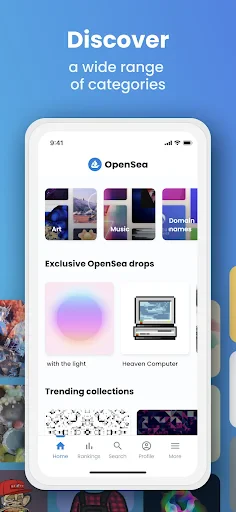
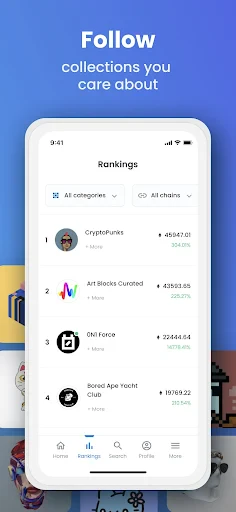
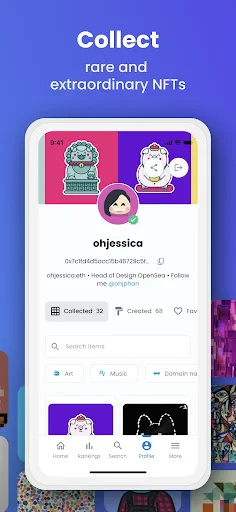
OpenSea's core functionality revolves around being a peer-to-peer marketplace for NFTs. Users can seamlessly browse an extensive, ever-growing catalog of digital items categorized by art, photography, gaming, music, and more. The platform enables straightforward purchasing of NFTs using cryptocurrency wallets like MetaMask. For creators, OpenSea offers intuitive minting tools to tokenize their digital work into NFTs without requiring deep technical knowledge, often with no upfront gas fees through lazy minting. Sellers can list their assets for sale at fixed prices or through timed auctions. Additionally, the platform provides portfolio tracking, allowing users to manage their collections, view transaction history, and monitor the value of their assets. Basic social features enable following creators and favorite items, enhancing discovery.
Chapter 2: Value
OpenSea's primary value proposition lies in its position as the established, liquid first-mover in the NFT space. Its key advantage is network effect: it boasts the largest volume of users, transactions, and listed assets, creating a vibrant ecosystem where liquidity and discovery are maximized. This scale benefits both buyers, who find the widest selection, and sellers, who access the largest potential audience. The platform significantly lowers barriers to entry with its user-friendly interface and simplified gas-free minting, making NFT creation and trading accessible to mainstream audiences beyond crypto-natives. Security and authenticity are underpinned by blockchain verification, ensuring provable scarcity and ownership. OpenSea also fosters creator empowerment through royalty enforcement tools, allowing artists to earn a percentage on all secondary sales—a transformative feature for digital creators. Its multi-chain support, particularly integrating layer-2 solutions like Polygon, reduces transaction costs and environmental concerns associated with Ethereum mainnet, enhancing practicality. As a foundational pillar of Web3, OpenSea's value extends beyond commerce to being a cultural hub and a gateway to decentralized digital ownership.
Chapter 3: Scenarios
OpenSea primarily serves digital artists and creators seeking to monetize their work directly through NFTs, bypassing traditional galleries or platforms. It is equally vital for collectors and investors interested in acquiring unique digital art, supporting creators, or speculating on asset value. Gaming enthusiasts use it to trade in-game items and characters from blockchain-based games. Musicians and filmmakers leverage it for releasing exclusive content and building community. Brands and marketers explore OpenSea for innovative digital marketing and engagement campaigns. In everyday use, a digital artist might mint a new collection on OpenSea, a collector might browse trending art categories to find a new piece for their virtual gallery, and a gamer might sell a rare weapon skin earned in a game. It facilitates scenarios from high-value art auctions to affordable collectible trading, all centered on verifiable digital ownership and peer-to-peer exchange within the open metaverse economy.
Uninstall Instructions
For step-by-step guidance on how to safely remove this application from your device, please refer to our 《Uninstall Instructions》 document.
Pros
- accesses the largest aggregated inventory of NFTs
- supports trading across multiple blockchain networks
- wallet integration enables immediate browsing and bidding
- creator tools allow royalty enforcement on resales
- detailed trait filtering for precise collection exploration
Cons
- high gas fees during network congestion periods
- requires pre-funded crypto wallet for any interaction
- sheer marketplace scale can overwhelm new collectors
- limited fiat on-ramps for direct purchases
- rarity tools and analytics require third-party services
Frequently Asked Questions
What is OpenSea and what can I do with it?
OpenSea is a leading decentralized marketplace for buying, selling, and discovering non-fungible tokens (NFTs). It primarily operates as a peer-to-peer platform where users can trade digital collectibles, art, domain names, and other virtual assets built on blockchain standards like Ethereum and Polygon. Core functions include browsing collections, listing items for sale via auctions or fixed prices, and creating NFTs directly through its minting tool, all within a web3 wallet interface.
Is OpenSea free to use, and what are the fees?
OpenSea provides verification tools to check authenticity. Look for a blue verification checkmark on a collection or creator profile, indicating OpenSea has verified them. Review the NFT's transaction history and details on its blockchain page. Be cautious of unofficial copies; always confirm the collection's name, contract address, and creator. Due to the open nature of the platform, users must conduct their own due diligence before purchasing.
What devices and wallets are compatible with OpenSea?
Creating an account and browsing OpenSea is free. However, transactions incur fees. When you sell an item, OpenSea charges a 2.5% service fee on the final sale price. Additionally, blockchain network (gas) fees apply for actions like minting, listing, and accepting offers, which vary based on network congestion. Note that buying NFTs also involves the asset's price and applicable gas fees. There are no subscription costs.
How do I ensure the NFT I buy is authentic?
OpenSea is primarily a web-based platform accessible via desktop browsers (like Chrome, Firefox) and mobile browsers. It does not have a dedicated native app in traditional app stores. To interact, you must use a compatible self-custody web3 wallet such as MetaMask, Coinbase Wallet, or Phantom. The platform supports assets on multiple blockchains, including Ethereum, Polygon, Klaytn, and Solana, but wallet and asset compatibility depend on the specific blockchain.
What happens if I have a problem with a transaction?
As a decentralized peer-to-peer marketplace, OpenSea does not hold funds or directly mediate most disputes. For issues like unauthorized transactions or technical problems, you can contact OpenSea Support through their help center. For disputes with sellers (e.g., misleading listings), resolution relies on community reporting and the immutable nature of blockchain transactions. Users are responsible for securing their wallets and understanding that transactions, once confirmed, are typically irreversible.
App Info
Technical Info
Recommended For You

GoTo
Business

Holy Quran - Deeper journey
Books & Reference

Cast Phone to TV, Chromecast
Business

delitoon
Comics

Cartoon Photo Editor ・Toon AI
Art & Design

Drawing Pad Pro - Sketchpad
Art & Design

10-4 by WEX
Auto & Vehicles

MangaToon: Comic & Manga
Comics

Freewave: Romance Audiobooks
Books & Reference

mobile.de - car market
Auto & Vehicles

Whitepages - Find People
Communication

Clip Studio Paint
Art & Design

PCGS CoinFacts - U.S. Coin Val
Books & Reference

DSLR HD Camera : 4K HD Camera
Beauty

Advance Auto Parts
Auto & Vehicles

ThinkDiag+
Auto & Vehicles

Guide For Stardew
Books & Reference

eHub
Business

Yaelokre OC Maker
Art & Design

Goods Unite Us
Books & Reference